Friday, March 26, 2021

FOODFIC: Please Welcome Hazel Edwards, Author of Hijabi Girl

What is fusion food?

We made it up. The term, NOT the food from different cultures.

Ever tried Gozleme Vietnamese style? 

Behind Melek were trays of syrupy baklava layered watermelon seeds instead of walnuts. It was SO HARD for Melek NOT to lick the sugar off the saran wraps covering the dessert trays. She didn’t.  The ladies from Melek’s mosque had rolled out dough to turn gozleme into a Vietnamesey sort of dessert.  Gozleme was one of her favourites. 

In Hijabi Girl,  our 10 year old Melek character  is a feisty girl in a hijab who wants to start an Australian Rules girls’ football team. She sets up a fundraiser where they sell ‘fusion’ food from many of the cultures of the children in their mainstream school. With the money raised they can buy their uniforms and start their sports club. But it’s really about sharing. Tien is her new Vietnamese friend whose Dad is a chef whose business is struggling, but helps his daughter’s friends. So does Melek’s hijabi-fashionista mother who designs sports clothes. 

Tasting ‘fusion’ food is genuine book research for writers. And fun. But proof- reading the names of food in our Hijabi Girl in a different language can be a challenge. And now we even have puppets which are a Vietnamese Rice Paper Roll and a Turkish Kebab! Australian Larrikin Puppeteers are performing Hijabi Girl the musical and touring post-Pandemic.


So glad we made up ‘fusion food’ to share cultures. Fact is following fiction.

Now real schools are combining the food of different cultures on celebratory days. And students are dressing up as Hijabi Girl and her friends for Book Parades.  This is an extract combining Turkish and Vietnamese cuisine. 

For the fund-raiser, Tien’s Dad, helps with a fusion menu of Vietnamese and Turkish food. It’s a sell-out.  Pays for footy uniforms for all:

'I have the price lists,' Lily said. 'My Dad and I printed them out last night.' She tried to place the correct prices on the trays. 'Soo which one is the Gozleme with peanuts? The rice pudding with muuun ga beans?’  Lily tried to pronounce "mung beans".

‘It’s hard to price things you can’t say.’

'I'll show you, ' Melek helped Lily match names and prices on the desserts.’These are my favourites. This round one is a moon cake, filled with Turkish pistachios. The ones in the clear cups are sutlac, it’s like a milk rice pudding but Tien’s dad made it with bananas and tapioca pearls. And this one, che, is in the bowls. It looks like a soup, but it tastes just like Baklava!’ 


Co-writing across cultures means being introduced to tasty food, even if difficult to pronounce the names. Food matters in children’s books. As the Australian author of the picture book There’s a Hippopotamus on our Roof Eating Cake (Puffin PRH),  I’ve shared lots of cake in hippo shapes across  40 years of  launches, book weeks, the film and the stage musical.


But our co-written Hijabi Girl junior novel had many knockbacks before publication due to media coverage of political incidents related to terrorism. Many of my books explore ‘coping successfully with being different’, but having ‘hijab’ in the title was challenging. My Australian co-author Ozge Alkan is a Muslim librarian who wears a hijab, is of Turkish origin, and was educated in USA, so she has an American accent. Ozge has helped on cultural issues. So has Serena Geddes, our illustrator of Sri-lankan heritage.


Australia is a very multi cultural society and when our book was launched at Craigieburn Library, an outer suburb of Melbourne, we had 62 nationalities and languages present.  Of our other characters Tien is Vietnamese, Zac is soccer mad , Lily loves fashion and for the series. AliGator is publishing and the Larrikin Puppets are performing, we’ve added Abdul, an Afro-Australian boy. A culinary and cultural mix. Ozge has been our cultural adviser on clothing length, hijabi folding and food.


In children’s books, food plays on the senses and provides a theme for book launches. A book offers the opportunity to live in another’s world for the length of the book and beyond via ‘fusion’ food and fusion cultures.


Thanks for stopping by to share your food for thought, Hazel!


Touring post-Pandemic, Hijabi Girl features 14 colourful hand puppets and creative rod puppets hand-crafted by seven different puppet builders from across Australia, Indonesia and the USA. The show includes bizarre and delightful pencil, football,shark  and FOOD puppets. Puppeteers - Brett Hansen and Elissa Jenkins –were trained in the USA by Jim Henson puppeteers from The Muppets and Sesame Street.

You can find more about the book, play, authors and more here:

Hijabi Girl Book Page of latest news, reviews, photos, clips and resources for Hijabi Girl. Also has Teacher Resources which educators appreciate. https://hazeledwards.com/files//Hijabi_Girl_/Teachers_Resources_Hijabi_Girl.pdf

Larrikin Puppeteers  

Ali Gator Productions     info@ali-gator.com

Illustrator Serena Geddes New Website   

Larrikin Puppeteers’ successful submission to Artour for 2021/2 Qld touring.  Details of Hijabi Girl content and process. Vital case study of persistence.


About the Author:

Hazel is interested in stories crossing mediums. Celebrant Sleuth: I do or die, an adult mystery with an asexual sleuth is her latest AUDIBLE fiction, plus  KINDLE sequel Wed Then Dead on The Ghan being adapted as a screenplay with co-writer/producer Geoffrey Wright.

Co-written Hijabi Girl series  soon to tour as ‘Larrikin Puppets’ musical  explores cultural diversity. There’s a Hippopotamus on Our Roof Eating Cake series, turned 40 in 2020. 
Her memoir Not Just a Piece of Cake-Being an Author explores longterm creativity. Hazel is the current patron of the Society of Women’s Writers (Victoria).


Friday, March 12, 2021

FOODFIC: Please Welcome H. Gibson, Author of The Chronicles of Han


As an author, I love food and give this love through in my books to the extent that readers blame me for 'putting on a few pounds' and'wanting coffee all the time'. I am glad that this is the feedback I receive.It means that I am doing what I am supposed to be doing as a writer. I allow the reader to experience the books.
 

"I have not taken food for a while. It would be a shock to my system," I replied, not wanting my mother to feel offended by my changing preference in food I used to enjoy.

"Do you no longer like the taste?" she enquired,revealing that she was well aware of what she was doing to me. It was her way of ascertaining what was wrong and different with me.

"If I could taste, I would probably enjoy the food," I confessed.

"Since when do you no longer taste?" she wanted to know, taking a second helping of bacon for herself, biting into the crunchy morsel with so much relish that I wanted to scream.

"Since becoming Navigator," I whispered."


Han Storm's comment on the above and his adventure with food in the Universe of Kraita: "When you become a Navigator you mostly need energetic energy, delivered by heavy metals such as gold, silver, copper and nickel alloy.

I still had a body. I still needed food. I had to stay human too in order to serve my Planet and her people.

My doctor had worked out a regimen of protein drinks, vitamin supplemented porridges, and intravenous feeds when they put me out to rest. I was a constant challenge for him; an interesting subject; a tool to be maintained, studied and kept in top condition.

Working in space was not for the faint of heart.

I missed planetary (three-dimensional) things. It became lonely without my family.

Above all, I missed to be able to just sit down and eat a proper meal. Something of everything I truly love.

Emotions are connected with food.

Memories are triggered by the thought, aroma or taste of a certain food item.

For me the adventure with food was an ongoing pleasure and experience.

Berries and wood smoke would elicit memories of Mara, Moira'smother, my first love. I only shared a week with Mara, highlighted with brilliant meals, from grilled fish, to a fowl baked to crispy heaven accompanied by baby sweet potatoes and other vegetables.

Chocolate and bacon always reminded me of father Tucker, my first partner in the Security Forces in my home town, on my beloved Creata.
 
Hei, my adopted father on Encha, loved to bake. His dried-out wheaten rusks, dunked into freshly brewed coffee until they were soggy to be eaten quickly was always a life-saver when I did not wish to eat but knew I had to.

Thick, juicy steaks, dripping with fat, charred to well done on the outside while pinkish in the middle was by far my favourite dish (next to anything with bacon of course).

Bacon could be served with every meal, in whatever form, I did not care if it was made from genetically engineered Sluggs and not pigs. It still tasted the same.

Sweet potatoes, squashes and pumpkins came after bacon and steak.I preferred the traditional Gaoucomian cooking of grilled sweet potatoes,sweetened with honey, cooked inside the tough skins. Such a meal will be served with whole green beans in garlic sauce, baby potatoes fried in bacon lard,grilled pumpkin flecked and filled with nuts and raisins, fresh fruits cut into finger portions, and green salads with spicy flowers.

My mother's sweet potato pie with whipped cream, sweetened with dark Gaoucomian wild honey was always a home treat. Basically any form of pumpkin in any form of pie made a great pudding.

For breakfast Hulo's farro made to a thick consistency from white maize, smothered under cream and sunny-side-up free-range eggs was a special treat.

Every meal should always be rounded off with coffee. No matter where we traveled, this beverage was still the preferred drink and thankfully was available in some or other form on almost all planets.

Good memories are made around meals.

Sad and hated memories too.

Certain foods, even though highly nutritious, I just could not stand. Enriched porridge and salty rye bread made me burst out into sweat at the memory of my imprisonment by the Enchan Cannibals. My people knew to keep these specific dishes far away from me.

I avoided taking any foods that reminded me of 'last meals' such as date pudding with sweet cream. It was the last serving of food Jade and I had shared before she died."

Conclusion from the author: Neither food nor eating should be taken for granted. There are many out there starving, unable to eat for whatever reason, be it poverty, drought, disease, illness or occupational hazard.

When you are blessed with food, use it wisely, be thankful, enjoy what you have, even if it is little, and please build good memories around meals.
 
Author, H Gibson, The Chronicles of Han Book Series


Thanks for stopping by to share your food for thought, H!


You can find H. Gibson here:


Thursday, March 4, 2021

FOODFIC: Please Welcome Kathryn Gauci, Author of Conspiracy of Lies


When writing Conspiracy of Lies, set in WWII France, food and wine played an important part in the story. I wanted to portray the difference between the glittering dinner parties of the German elite and the French people who were barely able to sustain themselves because of rationing and food being taken from France to Germany. My protagonist, Claire Bouchard, gets a taste for champagne when she is sent as journalist visit the champagne houses in the Champagne villages during the Phoney War prior to the German invasion of France. The great wine and champagne houses of France were a barometer of impending war much as they had been during WWI, and earlier wars, as the connections between French and German wine houses were very strong. On closer inspection, Claire notes that some of them are starting to hide their finest wines behind walled-up cellars. When she meets the man who will eventually become her lover, she learns even more about fine wine.

Although parts of the story are set in England and Paris, much of the story takes place in Brittany where Claire is sent to work as a secret agent for the British Special Operations Executive (SOE) and liaise with the Resistance. During her time there, she dines with the German Commandant who will become her lover and dines on everything from roast goose to venison with a rich red-wine sauce accompanied by an assortment of seasonal vegetables. She also has real coffee when her friends in the Resistance have nothing but foul-tasting ersatz coffee. Occasionally, she sneaks them out a piece of apple strudel or a ham. Even the breakfast table is a veritable feast: an array of cold cuts of meats, eggs, cheese, bread, and pastries. There is also an incident when the young son is out with his mother in Rennes and has an ice-cream. As everyone knows who the important German woman is with her son, it is served up without her paying for it, and the son leaves it, letting it melt in the warm son. Claire cringes when she knows such ice-cream is not available to most French at that time.

Even after the war, Claire still enjoys her fine wines, and her children cannot understand how she is such a connoisseur until her story as a secret agent unfolds. During several scenes after the war when her daughter, Sarah, tries to ask about her mother’s past, I bring in English afternoon teas, and contrast her mother’s Devil’s food-cake with a chocolate butter icing with that of her French friend’s afternoon teas in London. There, her maid creates wonderful French pastries, visitandes, macarons and madeleines.


Thanks for stopping by to share your food for thought, Kathryn!


You can find Kathryn here:


Thursday, February 25, 2021

FOODFIC: Please Welcome Susanne Gervay, Author of Shadows of Olive Trees


Food can be sensual and evocative in a world where cooking defines a women’s role. In Shadows of Olive Trees, the second rise of feminism battles against defined traditions of sexual roles and gender equity. Tessa, the good daughter of Greek immigrants is torn between the restrictions of traditions of the past and the dangerous freedoms of independence.

The Greek food is comforting, delicious, voluptuous, overflowing, all encompassing, blocking Tessa’s pathway to self determination. The cooking and feasting is part of daily life:


The priest honours her parents with a visit to the house. Mrs Kassis and Tessa lay out the dolmades, taramasalata and spinach squares on the coffee table in the sitting room. The priest is punctual. His long black flowing gown and dark beard are familiar and Mr Kassis welcomes him into his house.

The priest is a stern man, unwilling to compromise on the stringent morals of his Church. Around him, Tessa is nervous, and she hopes he doesn't sense her other life, hidden behind her serving. The priest compliments Mrs Kassis on her dolmades, making her smile. Mr Kassis and the priest talk politics and social order while Peter listens respectfully, speaking only when a question is directed at him.

The women clear the table and bring the cakes they have spent days preparing. Tessa licks honey from her fingers as she carries sweet baklava laden with honey and nuts to the table. Almond pastries, Greek sweets, kataifi lie on the table like wanton women ready to be taken. Tessa smiles as the priest and her father being wrapped around the pastries.

The priest leaves, content. Mr Kassis goes to his room, because he is tired from the long hours in his factory. Peter sees that his mother is tired too, and takes some plates to the kitchen to help her. Mrs Kassis kisses her son. Tessa and her mother continue cooking and baking for the events that mark the visiting and feasting of Christmas.


***


Tessa and her family visit John Pappas and his parents. John Pappas has been approved asTessa’s potential husband. As the visit continues, the food and drink reflect the two worlds:


After the greetings and the ritual compliments on each other's appearance and the house, the men go to the lounge room. Mr Pappas opens the bottle of ouzo and pours a glass for Peter and Mr Kassis, then himself and John Pappas. 'Strong.' Mr Pappas approves and smiles. Tessa and Mrs Kassis are already in the kitchen helping Mrs Pappas with the meal ... 

The table is laid with silver service. The centre-piece is a painted glass bowl overflowing with out- of-season peaches, plums, cantaloupe and strawberries. The meal is generous, overflowing like the fruits in the bowl. Moussaka is layered heavily with black eggplant and the leanest cut of topside mince. Salads of red tomatoes from the garden and black olives and white feta spill over the edges of bowls. The bread is fresh, bought from the bakery because the parents only eat freshly baked bread, like it was at their Greek village.


Food is so seductive. We want to make the honey baklava with its flaky thin pastry, nuts, dripping with honey. We can feel the love Tessa has for her family and traditions, like the pleasures of eating baklava. However, the honey sticks and Tessa has to make the decision to be all she can be.


Thanks for stopping by to share your food for thought, Susanne!


You can find Susanne here:

SGervay.com

Twitter @SGervay

Facebook Fan Page

Books on Amazon


Astrid Lindgren Memorial Award nominee, you'll find Susanne in Istanbul speaking to 1000s of kids about NO bullying; advocating for the United Nations Vision2020 in a campaign for sight, recording The Boy in the Big Blue Glasses for Vision Australia; in remote indigenous schools bringing literacy to kids from pre-schoolers to young adults. Susanne Gervay’s loved books include her anti-bullying I Am Jack books; YA books Butterflies (disability), Shadows of Olive Trees (feminism); picture books Elephants Have Wings (Harmony Day), The Boy in the Big Blue Glasses (Vision2020) and Heroes of the Secret Underground empowering kids to become warriors of change.


Thursday, January 28, 2021

FOODFIC: Please Welcome Christian W. Freed, Author of Dreams of Winter


Day 73.

Feels like we’ve been on this planet forever. Campaigns stretch on. Friends fall with each battle, but we endure. What other choice do we have? Command says this planet has to stand or we risk losing half the galaxy. We’ve been at the sharp end of the stick since the civil war began. No one rightly knows how or why. All we’ve been told is the Inquisitor General staged a coup, had the Cardinal Seniorus killed, and General Strannan is in exile.

None of that matters to us grunts. The men and women we’re busy fighting were our friends just a few short months ago. Seven hundred occupied planets and we’re busy tearing each other apart. I guess the universe just isn’t big enough for dueling egos. At least they feed us. Granted, it’s army food and not very appetizing, but there’s no better feeling than going to sleep on a full belly. 

Each Guardsman is given three days' worth of rations. Mostly dehydrated meats and fruits or highly processed foods designed to last to the end of time. Be careful with some of it, you might just crack a tooth. But if it gets you off the front lines who can argue?

Rumor has it one of the Three is fueling the rage here. None of us wants to meet him. The old gods destroyed themselves long ago. The thought of facing one on this campaign is enough to make you empty your stomach. Huh, won’t the cooks be angry about that! Speaking of which, I can smell fresh food being cooked across the bivouac site. Looks like hot chow tonight. I figure it’s the least they can do for us. We have 27,000 Guard on planet and are facing a force twice our size. Unless help comes soon it won’t really matter what’s for dinner. 


Dreams of Winter was born on a random idea one winter afternoon while I was stationed at West Point in 2009. A few weeks later the first few chapters sprung to life in my room at the Four Seasons in Philadelphia. Now five volumes long, the Forgotten Gods Tales is my most ambitious project. It follows a handful of reluctant heroes as they uncover a plot to overthrow a ruling body that has been in place for three thousand years. Filled with magic, space pirates (because, of course), an Inquisition, and a handful of the old gods, Dreams of Winter is mostly about ordinary men and women just trying to survive. Partly derived from my own military experience and time downrange in Iraq, Korea, and Afghanistan, this series is a reflection of the people who fight and their reasons for doing so. 


Thanks for stopping by to share your food for thought, Christian!


You can find Christian here:

ChristianWFreed.com

Twitter @ChristianWFreed

Facebook Fan Page

Books on Amazon


Friday, January 22, 2021

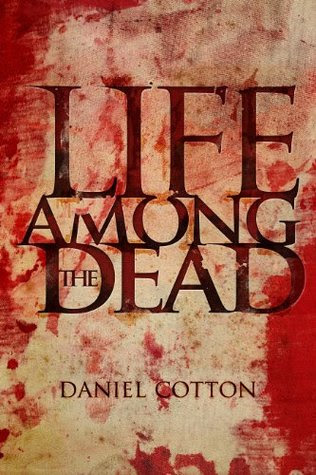
FOODFIC: Please Welcome Daniel Cotton, Author of Life Among the Dead


Food is one of the three keys to survival, but what happens when you yourself are put on the menu? In my zombie apocalypse series, Life Among the Dead, we meet an array of characters and see different ways to survive, from scavenging to homesteading. Whether they are heroes or villains they all share one trait, they need to eat. Food is not just sustenance to keep us going, it can also give us comfort, it can bring us together, it makes us feel human.

One of my favorite characters is Uncle Bruce. He uses a story about food to explain his theory of how the dead are rising. On a whim, before the apocalypse, he decided to use his vast resources to make himself a burger entirely from scratch, no preservatives. Everything he needed grew on his farm; lettuce, tomato, onions, and cucumbers that he pickled himself. He had cows for beef and even a pig for bacon. Bruce went so far as to make the cheese and buns himself. He was ready, the grill was fired up, but then he realized before starting that he had failed. Condiments. He could make mayonnaise, but didn’t know how to make ketchup or mustard. Preservatives are everywhere he concluded. Now, at the end of the world he contemplates if the stuff that keeps food food could be causing the new horror they face.

Through this four book saga of intertwining tales I sprinkled my own culinary tricks, how to grill perfect ribs, and how to make a virgin tiramisu simply by putting in maple syrup and leaving out the rum. The latter is revealed by another of my favorite characters, the underdog leader of the town of Rubicon, Simon Brass. Simon was a grocer in the world before and still employs his old trade in his new way of life. He makes displays in his store to move the hard to ‘sell’ items. He rations things in limited supply to prolong the inventory. Cake mixes and frostings are two things his fellow survivors snatch up quickly to commemorate dead loved ones, birthday cakes with no candles. 

Not all the meals in the series are appetizing, unless you’re a zombie. Sink your teeth into this survival horror epic.


Thanks for stopping by to share your food for thought, Daniel!


You can find Daniel here:

DanielCotton.weebly.com

Twitter @DanielCCotton

Facebook Fan Page

Books on Amazon


Friday, January 15, 2021

FOODFIC: Please Welcome Jayne Denker, Author of Down on Love


Thom started to pace, which wasn’t a very effective aggressive move—not in Georgiana’s tiny, shadowed apartment. For really good, forceful pacing, you needed more than four feet of free space. She didn’t have that—not by a long shot.

“Why can’t you think of someone other than yourself for once!” he exclaimed.

George bit the inside of her bottom lip to keep from guffawing in his face. Thom Tyler lecturing her about selfishness, when he’d written the book on it? Really? Instead of sniping at him, she took out her aggressions on a freshly peeled apple. Which looked a lot like his head, actually. Smiling now, she centered the circular apple slicer and gave a mighty shove downward. The sharpened metal blades thoomped neatly through the Twenty Ounce, and she thought she should feel a little guilty for imagining doing the same thing to Thom’s head, like in an old cartoon, from back when animated violence wasn’t frowned upon. She gave up on the guilt and relished the gory vision for a few seconds, then made her amends by picturing his sectioned head coming back together neatly and bloodlessly.


Georgiana Down, the main character in Down on Love, the first book in my small-town romcom series Welcome to Marsden, has a lot of stress in her life. She was downsized out of her job as a graphic artist, broke up with her emotionally abusive boyfriend, and now lives in a drab apartment with a weird roommate. Meanwhile, her sister is haranguing her to return to their tiny hometown in the Catskill Mountains in central New York State—a place she hasn’t visited, let alone lived in, in fifteen years. She has two activities in her life that relieves her stress: her successful anti-romance advice blog (Down on Love) and baking pies.

When I started writing Down on Love, there was nothing in my notes about George baking pies. (And I take a lot of notes before I start writing.) I don’t know how it came about that George’s “thing” is baking, and only pies, but I definitely drew on my personal experience. I learned how to make pies back when we rode dinosaurs to school, in what was then known as home ec class. Did you ever have one of those teachers, one you just knew would teach you something (or many things) you would carry with you the rest of your life? Sister Dismas was one of those teachers. She was a Sister of Mercy who also was the best geometry teacher since Euclid, had been a missionary in Africa and always had great stories about hanging out with cannibal tribes, and had the best from-scratch apple pie recipe. I mastered it at 16 and have been using the same recipe ever since. When I realized Georgiana needed a stress-relieving hobby, having her bake pies—using that same recipe—was the perfect fit.

After all, pies are comfort food, something George craves. I recently held a pie-themed giveaway, and one of the prizes was a plaque that said “All I’m saying is you rarely see someone crying and eating pie at the same time.” Now, that’s some top-level philosophizing right there. And true! Pies are associated with home, comfort, family gatherings, home-cooked meals, and definitely that funky diner in town—you know the one, with laminated menus and vinyl booths and the dessert carousel at the end of the counter filled with pies and pudding, rotating endlessly, tempting you to indulge even though you just polished off a cheeseburger the size of a small planet.

I don’t think it’s giving away much to say that George’s pies play a role in some key scenes in Down on Love, as well as in Picture This and Lucky for You, the second and third books in the Welcome to Marsden series. Do they end up in that dessert carousel in the diner?

You bet your Granny Smith they do.


Thanks for stopping by to share your food for thought, Jayne!


You can find Jayne here:

JayneDenker.com

Twitter @JDenkerAuthor

Facebook Fan Page

Books on Amazon

Friday, December 18, 2020

FOODFIC: Please Welcome M.W. Craven, Author of The Puppet Show


It had never been my intention to give food such prominence in the Poe and Tilly books, and even when it happened, it kind of happened organically. Poe eats what he wants, when he wants, mainly sausages and black pudding and Tilly has been a vegan since she was thirteen. Having them eat a meal together, or discuss (let’s not pretend; they argue) Poe’s diet allows me to a) showcase the very different personalities of my two leads without hammering the reader over the head with it, b) inject human moments into what can occasionally be quite dark books and c) add some humour.


Before they could leave, Poe had to navigate his way through their ongoing discussion about his diet. This one was about wholemeal bread, specifically Poe’s refusal to eat it.

‘Life’s too short to not eat white bread, Tilly,’ he said as he reached for the last piece of toast. He slathered it with salted butter and took a bite.

‘You keep saying that, Poe,’ she said. ‘But all you’re doing is stacking up problems for tomorrow.’

He held it up. ‘It’s one bit of toast.’

‘That is one bit of toast, Poe. But so were the other seven bits you’ve eaten.’ 


Of course in Black Summer, the second Poe novel, food became one of the central themes as the novel involves a murder that may or may not have taken place in a Michelin-starred restaurant. The juxtaposition between Poe’s usual diet and that of the food prepared in the restaurant was great fun to write. One scene popular with readers sees Poe and Tilly eat a seventeen-course taster menu and I think this little snippet sums it up quite well:


A succession of small but delicate dishes followed, each one more complex than the previous. A sea urchin that Poe felt sorry for was served in its own shell. It had the texture of set custard with the briny taste of fresh oyster. Every time he took a bite, Bradshaw said, ‘Yuk’.


But it’s not just with Tilly that Poe discusses food. This bit is taken from The Botanist, out June 2022, and sees Poe holed up with someone he can barely tolerate:


‘It’s not all bad news though,’ Poe said. ‘I’m treating everyone to a nose-to-tail goat later. There’s a Moroccan place nearby that dry rubs a whole one with five types of chillies before it’s basted in its own fat for twenty-four hours. Comes with the works: preserved lemons, toasted almonds, the lot. If you stop moaning you can have one of the eyeballs.’

‘You’re disgusting,’ Salt said.


Of course it’s not just Poe who gets all the amusing lines when it comes to food, as this fragment from The Puppet Show demonstrates. Here Poe and Tilly are meeting with the Bishop of Carlisle:


Ordinarily Poe would have declined but he wanted to keep it informal. ‘I’ll have a coffee please, if that’s OK? Tilly?’

‘Do you have any fruit tea, Nicholas?’

‘I believe Mrs Oldwater enjoys a cup of liquorice tea every now and then. Will that do?’

Bradshaw shook her head, ‘No thank you, Nicholas, liquorice gives me diarrhoea.’


Anyway, I’m off to eat a bacon sandwich . . .


Thanks for stopping by to share your food for thought, Mike!


You can find Mike here:

MWCraven.com

Twitter @MWCravenUK

Facebook Fan Page

Books on Amazon


Friday, December 11, 2020

FOODFIC: Please Welcome Brenda Drake, Author of Analiese Rising


Certain scents, places, and foods can remind us of our loved ones who have passed away. In Analiese Rising, Analiese and her brother go to the same coffee house they’d visited with their father for years. Their father had recently died and, whenever they’re in the area, they stop in and have a coffee together in honor of him. She remembers their first time there and how it started with her and her brother getting hot chocolates and how they graduated to coffee now that they’re in their teens. 

The coffee house holds many warm memories for Analiese. The gradual change from hot chocolate to coffee reveals her growth from a child to a young adult. There was once joy in going to the coffee house with her father and brother. And now, it’s only a ritual. One they haven’t broken since he died, but one that brings a sadness and yet a warmth to her. 

Analiese’s real parents died when she was a baby, and the only father she ever knew was her uncle. Their relationship was perfect to her, he was perfect. But one day, on the way to the coffee house, an accident happens in front of it that sets off a crumbling of her belief in who her father was and her true identity. The coffee shop disappears as that safety place for her. It becomes the jumping off place of all her fears. 

We remember many special things from when we were children. Sometimes the further we grow away from them, the more special they become. And sometimes, the distance of our past can cause us to forget. Growing up and losing our special moments that only our childhood can give us, seems inevitable. It’s a rite of passage we all must take even if we don’t want to.  

At this time of year, during the holiday season, I’m more reminiscent of old family traditions. I used to be sad that they were no longer the same. No longer as magical as I remember them. It wasn’t until I started my own family and my own traditions, adding many from my youth, that I realized I can give my children the memories I was so lucky to have and pass it on. 

What old traditions do you miss? What new ones have you started with your family?


Thanks for stopping by to share your food for thought, Brenda!


You can find Brenda here:

Brenda-Drake.com

Twitter @BrendaDrake

Facebook Fan Page

Books on Amazon

Friday, December 4, 2020

FOODFIC: Please Welcome Rosanne Dingli, Author of How to Disappear


When ice cream is more than just ice cream

A number of objects, themes and settings can be used in fiction to ground the action; to make it real. Characters seem to spring to life when they dance and run, embrace or cry; but little adds subtle weight to a story better than food and drink. The way the hero of the piece holds a fork; the way his rival points his knife, and crams chips into his mouth, dripping with sauce or mayonnaise.

We have read of a princess daintily spooning crème brûlée into pursed lips while thinking of her figure. We have watched children greedily tuck into filled rolls after a swim, dangling feet off a jetty and smiling through lettuce, cheese and tomato. We have nodded as we recognize the lunchtime hunger of high school students standing in a canteen line and eyeing dreary mashed potato, grey peas and watery stew. We have read of a portly parish priest waiting at a stained tablecloth for his meagre lamb chop and claret, while jealously thinking of the mayor and a large poached salmon, two doors down the high street.

In my novel How to Disappear, which is written in lyrical repetitive language used to express the tone and mood of the female protagonist’s situation, I try to express longing, or boredom, or happiness, or grief through food. It also jogs readers’ memories about food and the roles it played in their young lives. The emotional episodes of my youth and childhood were all accompanied by food. There was the miserly thin meat of school dinners, the generosity of grandparents and their trifle and roast pork. There was the clumsy attempt at baking a first cake, poorly iced but so delicious, and the boiled eggs and toast fingers of the sick bed. And how could I forget the struggle of learning to eat spaghetti?

The challenge in my novel is to make it as subtle as I can, to portray the waking emotions of a woman too long stifled and suppressed by the people she thought loved her. Here is an excerpt taken from the first section of this two-part novel:


She watched him eat two hamburgers, grasping them like they were alive, like they would escape if he loosened those spatulate fingers. Flattened fingernails. Tinged a kind of mauve underneath broad ridged nails. Rolled up sleeves on his blue, blue shirt revealing sinewy muscles and hairs bleached and bristly. Working jaw, chewing, square, what her friend Thelma might label strong and scary. He could be an axe murderer, she’d said.

‘I told … I said I was taking the coach. Except to Thelma. I told Thelma I’d met you again.’

Raised his eyes. Oh. Dark, dark brown in here out of the sun. ‘Again?’

‘Since school and all that.’

Laughed. ‘All that you hardly remember.’

‘Hm.’

Wiped his mouth in long drags, side to side, with a paper napkin folded into a strip, a horizontal thing, left to right, right to left. Taking a deep breath, smiling hugely. ‘That hit the spot.’ Drinking tea like it was necessary. ‘Do you want more tea?’

She nodded.

‘And something from … A cake, or something?’

Oh. Wanting, needing, wanting to enjoy this properly. ‘Ice cream. Let’s have ice cream.’

‘Now, Selby-Brixham-Bec-Winmarley, now go ahead and enjoy this properly then.’

How did he know? Walked over to the counter. Watched the girl pile three differently-coloured scoops into a fluted ice-cream dish. ‘Do you want nuts or sprinkles with that?’

Morgue calling from the table. ‘Both! Both!’

It was a holiday. She didn’t know, three days ago, that she wanted a holiday. Had not even wished for one. And here she was, dipping, dipping a spoon, taking turns with two spoons. Laughing. Scooping up green, cream, pink ice cream tasting of real cream, country cream. Avoiding the nuts in the dish. Sharing ice cream. With two spoons. Never done before.

‘You don’t like nuts.’ Not a question, but a mental note taken. He would remember, like he remembered her graduation ball gown.

‘Are we on holiday?’ Shaking, lowering her head and smiling. ‘I must be crazy.’

‘You are. You left town with this guy you hardly remember from school. Just like that.’ Broad smile. 


That hot tea, those hamburgers, the ice cream, those nuts; they frame the action and are more than mere props. There is meaning, emotional meaning, in their invention. Although a writer rarely stops to think too much about the food placed in a story, it is intuitively chosen for its suggestions, its hints. It is emotional, communicative, suggestive of the feelings floating around the characters as they play out the complications. We call the complications plot, we call the food and utensils, the plates and cutlery props, but a good writer knows they are more than that. They are carriers of mood, emotion and meaning, and they travel from writer to reader like the scent of herbs and garlic, or of caramel, lemons, and vanilla. Food is introduced and served a number of times through the narrative, and it always carries the weight of meaningfulness.

Enjoy the next course by finding this novel on Amazon and eating and drinking with the protagonist on her adventure.


Thanks for stopping by to share your food for thought, Rosanne!


You can find Rosanne here: